

when to reset your headset
We’ve all been there. You’re mid-game, fully immersed, when suddenly your Meta Quest 4 glitches out. Maybe the tracking is going haywire, or a favorite game keeps crashing. It's frustrating, to say the least. Sometimes, a simple reset is all it takes to get things running smoothly again. But knowing when to reset – and what kind of reset to perform – is important.
A reset essentially clears out temporary files and processes that might be causing problems. It’s like giving your Quest 4 a fresh start. However, it’s not a magic bullet. A reset won't fix hardware issues, and it won’t suddenly make older games run better. It’s primarily for resolving software-related hiccups.
There are two main types of resets: a soft reset and a factory reset. A soft reset is a quick restart, similar to rebooting your computer. It's useful for minor glitches. A factory reset, on the other hand, erases all your data and settings, restoring the headset to its original, out-of-the-box state. This is a more drastic measure, reserved for more serious problems or if you’re planning to sell the headset.
If you're experiencing frequent crashes, persistent tracking problems, or your Quest 4 is generally sluggish, a reset is worth trying. If you're just looking for a clean slate, or if you're troubleshooting a particularly stubborn issue, a factory reset might be the answer. Just remember to back up any important data before proceeding with a factory reset.
how to perform a soft reset
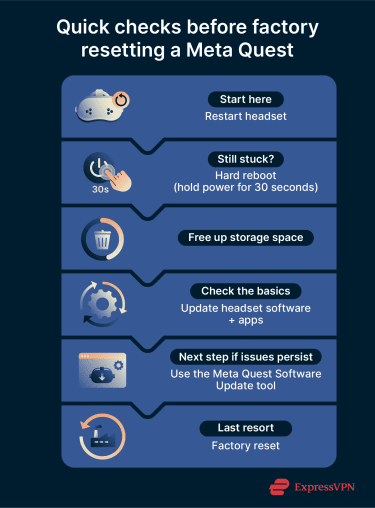
Performing a soft reset on your Meta Quest 4 is incredibly simple. Just press and hold the power button on the side of the headset for about 10-15 seconds. The headset will turn off and then automatically power back on.
A soft reset is designed to clear out temporary glitches and restart the system. It's a good first step when you encounter minor issues like a frozen screen or a game that's not responding. Importantly, a soft reset does not erase any of your data, apps, or settings. It’s a non-destructive process, so you don’t have to worry about losing anything.
This is the first thing to try for frozen screens. It doesn't touch your save data or installed apps, so there is no risk in trying it before moving to more aggressive fixes.
factory reset steps
A factory reset should be considered a last resort, as it will erase all data on your Meta Quest 4. This includes your apps, games, settings, and saved progress. Before you begin, make absolutely sure you’ve backed up any important data you want to keep. While Meta offers cloud backup options, it’s always a good idea to have a local backup as well.
To initiate a factory reset, put on your headset and navigate to Settings. From there, go to System, then Advanced Settings, and finally, Reset. Select "Factory Reset’ and confirm your decision. You’ll be prompted to enter your password for security. Be aware that you"ll need a stable internet connection during the reset process, as the headset will need to download and reinstall the system software.
It's also crucial to ensure your Quest 4 is adequately charged – ideally, at least 50% – before starting the factory reset. An interrupted reset due to a dead battery can potentially cause serious problems. The process will take several minutes to complete, and the headset will restart several times. Do not interrupt the process.
Once the reset is complete, you’ll be greeted with the initial setup screen, as if you’ve just unboxed the headset. You’ll need to connect to Wi-Fi, log in to your Meta account, and re-download all your apps and games. It’s a bit of a hassle, but sometimes a clean slate is exactly what you need to get your Quest 4 running optimally.
- Put on your headset.
- Navigate to Settings > System > Advanced Settings > Reset.
- Select "Factory Reset".
- Confirm your decision and enter your password.
- Ensure a stable internet connection and sufficient battery charge.
- Allow the process to complete without interruption.
Resetting Without a Controller
What if your controller isn’t working? Don't panic. You can still perform a factory reset using voice commands or the headset’s built-in hand tracking. However, the availability and functionality of voice control have evolved over the years, so its success in 2026 is not guaranteed.
If voice control is enabled, try saying “Open Quick Settings” followed by “System” and then “Reset.” The headset should navigate to the reset menu. If hand tracking is available, you can use your hands to navigate the menus and select the "Factory Reset" option. This may require some practice and precision.
The exact commands and gestures may vary slightly depending on your Quest 4's software version. If you're having trouble, consult Meta's official support documentation for the most up-to-date instructions. It’s a good idea to familiarize yourself with these alternative methods before you lose controller functionality.
Troubleshooting Reset Issues
Sometimes, a reset doesn't go as planned. You might encounter error messages, or the headset might get stuck in a boot loop. If you see an error message, try searching for it on Meta’s support website. The error 403 (Forbidden) reported in some older sources may or may not still be relevant in 2026, but it illustrates the potential for unexpected issues.
The most common culprits for failed resets are poor internet connection, insufficient storage space, and software glitches. Ensure you have a strong Wi-Fi signal and that your headset has enough free storage. Try restarting your router and clearing some space on your headset before attempting the reset again.
If the reset process gets interrupted – say, due to a power outage – you might end up with a corrupted system. In this case, you may need to contact Meta support for assistance. They may be able to provide more advanced troubleshooting steps, or even arrange for a replacement if necessary. Don’t attempt to disassemble the headset yourself, as this will void your warranty.
It's important to be realistic. A reset isn't a guaranteed fix for every problem. Sometimes, the issue lies with the hardware, and a reset simply won’t help. If you've tried all the troubleshooting steps and your Quest 4 is still malfunctioning, it might be time to consider professional repair or replacement.
Preventing Future Reset Needs
While resets are sometimes necessary, you can take steps to minimize the need for them. Regularly update your Quest 4’s software to ensure you have the latest bug fixes and performance improvements. Meta frequently releases updates that address known issues.
Manage your storage space efficiently. Delete apps and games you no longer use, and clear out any unnecessary files. A full storage drive can significantly impact performance and stability. Avoid sideloading apps from untrusted sources, as these can introduce malware or cause system instability.
Proper headset care is also important. Keep the lenses clean and store the headset in a safe, dry place when not in use. Avoid exposing it to extreme temperatures or direct sunlight. Regular maintenance can help extend the life of your Quest 4 and reduce the likelihood of problems.
Advanced Reset Scenarios
In rare cases, your Quest 4 might become completely unresponsive – effectively "bricked." Or, the reset process might get interrupted, leaving the headset in an unknown state. These situations are more complex and often require professional assistance.
If the standard menus won't load, hold the power and volume down buttons simultaneously to access the bootloader menu. If the headset remains unresponsive here, the hardware is likely damaged and requires a Meta support ticket for a replacement.
It’s important to note that attempting to repair the headset yourself could void your warranty. Always prioritize contacting Meta support for assistance with complex issues. While there are online communities dedicated to VR troubleshooting, be cautious about following advice from unverified sources.
How often do you typically reset your Meta Quest 4?
Vote below!


No comments yet. Be the first to share your thoughts!