

Back up your data first
A factory reset on your Samsung Galaxy S26 is a powerful troubleshooting step, but it wipes your device clean. Before even thinking about hitting that reset button, a solid backup strategy is essential. Losing photos, contacts, or important files is easily avoidable with a little preparation. I’ve seen too many people learn this lesson the hard way.
Samsung Cloud is a starting point if you use their ecosystem. It backs up gallery photos, contacts, and calendar events. You get 15GB of storage for free, but you'll need to pay for more if you have a large photo library. Samsung recently moved some features to OneDrive, so check your settings to see what is actually syncing.
Smart Switch is another excellent option, particularly for transferring data to a new device, but it works wonderfully for backups too. You can connect your Galaxy S26 to a computer via USB, or use a wireless connection, and Smart Switch will create a complete backup of your phone’s contents. This is a good choice if you want a local copy of everything, and it’s often faster than cloud-based solutions. It's also useful for migrating data from an older device.
Google One is often overlooked, but it’s a fantastic all-around solution. If you use Gmail, Google Photos, or Google Drive, you likely already have a Google account. A Google One subscription gives you expanded storage across all these services, and it also backs up your device’s data, including apps, photos, videos, and contacts. The basic 100GB plan is relatively inexpensive and provides ample space for most users. If a backup fails with any of these methods, double-check your internet connection and ensure you have sufficient storage space available.
When a factory reset is actually necessary
A factory reset isn’t a magic bullet for every tech problem. Sometimes, a simple app update or a cache clear will do the trick. However, there are situations where a reset is genuinely the best – or only – solution. It’s important to understand these scenarios before wiping your phone.
Severe software glitches are a prime candidate for a reset. If your phone is constantly crashing, experiencing random freezes, or apps are behaving erratically, a factory reset can often resolve these issues by reinstalling a clean version of the operating system. Persistent performance issues, like extreme slowness or lag, even after closing apps and freeing up storage, can also be addressed with a reset.
If you’re planning to sell your Samsung Galaxy S26, a factory reset is essential for protecting your personal data. It removes all your accounts, apps, and files, ensuring the new owner doesn’t have access to your information. Removing malware is another valid reason. While antivirus apps can help, a reset offers a guaranteed way to eliminate stubborn infections. Finally, if you’ve forgotten your lock screen PIN or password and can’t regain access through other means, a factory reset might be your only option, but be aware this will erase all data.
However, be aware that a factory reset may void your warranty in certain situations, especially if the issue causing the reset isn't covered by the warranty itself. Always check the terms of your warranty before proceeding. Sometimes, a simple software update or a visit to a Samsung service center can resolve the problem without resorting to a reset.
How to reset using settings or recovery mode
Samsung provides two main methods for performing a factory reset on the Galaxy S26: through the Settings menu (if the phone is responsive) and via Recovery Mode (when the phone won't boot normally). The method you choose depends on whether your phone is functioning well enough to navigate the settings.
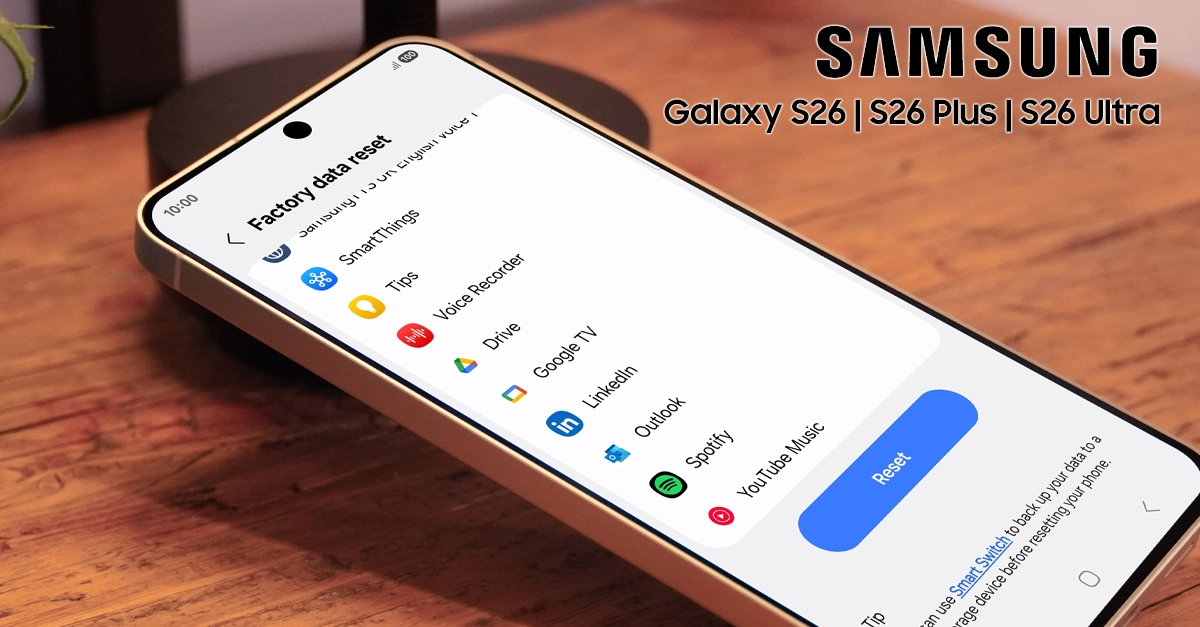
To reset from the Settings menu, open Settings > General management > Reset > Factory data reset. You’ll be prompted to confirm your decision and may need to enter your PIN, pattern, or password. The phone will then begin the reset process, which can take several minutes. Make sure your phone is sufficiently charged – at least 50% – before starting.
If your phone won’t boot normally, you’ll need to use Recovery Mode. This is a bit more involved. First, power off your phone completely. Then, press and hold the Volume Up and Power buttons simultaneously. You may also need to briefly press the B2B button. Release the buttons when the Samsung logo appears. This will boot your phone into Recovery Mode. Use the Volume Up/Down buttons to navigate the menu and select Wipe data/factory reset. Confirm your selection with the Power button. The reset process will begin. If the phone gets stuck during the reset, try holding the Power button for an extended period (10-15 seconds) to force a reboot.
The button combination for recovery mode varies between S26 models. Check the official Samsung support site if the standard buttons don't trigger the menu.
- Power off your phone.
- Press and hold Volume Up + Power buttons.
- Release when the Samsung logo appears.
- Navigate to Wipe data/factory reset using Volume buttons.
- Confirm with the Power button.
What gets deleted
A factory reset is thorough, but it’s not a complete obliteration of everything on your phone. Understanding what gets erased – and what doesn’t – is important. It's easy to assume everything is gone, but that's not always the case.
During a factory reset, all your installed apps and their associated data are removed. This includes game progress, app settings, and login information. Your account information – Google, Samsung, and other accounts – is also removed, requiring you to sign back in after the reset. System settings, downloaded files, photos, videos, and contacts stored on the phone’s internal storage are all wiped. Essentially, everything that isn’t part of the core operating system is deleted.
However, data stored on an SD card (if your Galaxy S26 has one) is not erased. This is a crucial point to remember if you have important files stored on external storage. Similarly, some data might remain in cloud storage, depending on your backup settings. Regarding security, a factory reset makes data recovery more difficult, but it’s not foolproof. Specialized data recovery tools might still be able to retrieve some information, especially if the reset wasn’t performed with encryption enabled.
- Installed apps and their local data
- Account information (Google, Samsung, etc.)
- System settings
- Downloaded files
- Photos and videos (internal storage)
- Contacts (internal storage)
Setting up your phone again
After the reset completes, your Samsung Galaxy S26 will boot up as if it were brand new. The initial setup process is similar to when you first purchased the phone. Be prepared to spend some time restoring your data and reconfiguring your settings.
The first step is to connect to a Wi-Fi network. Then, you’ll be prompted to sign in to your Google account. If you backed up your data to Google One, you’ll have the option to restore from that backup. Next, sign in to your Samsung account to restore data backed up to Samsung Cloud or Smart Switch. You’ll also need to re-enter any other account credentials you use.
Once your accounts are restored, you can begin reinstalling your apps. If you used Smart Switch, you can restore apps in bulk. Otherwise, you’ll need to download them individually from the Google Play Store. Finally, reconfigure your settings – Wi-Fi passwords, notification preferences, display settings, and so on. Take your time and double-check that everything is set up correctly.
To ensure your data is fully restored, verify that all your contacts, photos, and files are present and accessible. Test a few apps to make sure they’re functioning as expected. It’s a bit of a chore, but it’s worth the effort to get your phone back to its previous state.
Troubleshooting Reset Issues: What If Something Goes Wrong?
Despite careful planning, things can sometimes go wrong during or after a factory reset. The most common issue is the phone getting stuck in a boot loop – repeatedly restarting without fully booting up. This can often be resolved by performing a cache wipe in Recovery Mode. If that doesn’t work, you might need to re-flash the firmware, which is a more advanced procedure.
Errors during the reset process itself can occur. These are often related to corrupted system files. If you encounter an error message, try restarting the reset process. If the error persists, it might indicate a more serious hardware issue. Data restoration failures are also common, especially if your backup is corrupted or incomplete. Try restoring from a different backup if available.
If the phone crashes or acts up after the reset, try clearing the cache partition in recovery mode. If that fails, contact Samsung support. Some hardware failures require a professional technician.
Samsung’s support website has troubleshooting guides and contact info for their repair teams.

No comments yet. Be the first to share your thoughts!