

How Windows 12 handles logins
Windows 12 pushes Microsoft accounts as the default login method. While this makes the OS more secure than the old local account setup, it changes how you handle a lockout. Security questions are mostly gone, replaced by recovery emails and biometric checks that are harder to fake but easier to get locked out of if you aren't prepared.
This transition isn’t necessarily a bad thing. Stronger security is always welcome. However, it does mean that users need to be prepared for a different experience when they inevitably forget their password. Relying solely on security questions was always a weak point, easily compromised by social engineering or simple guesswork. The new system, while more secure, requires a proactive approach to account recovery.
Microsoft accounts add a layer of frustration if you lose access to your recovery email or phone. While Windows Hello biometrics are the standard now, they don't help if the sensor fails or you never set them up. Here are five ways to get back into your machine without needing those old security questions.
Create a recovery disk before you're locked out
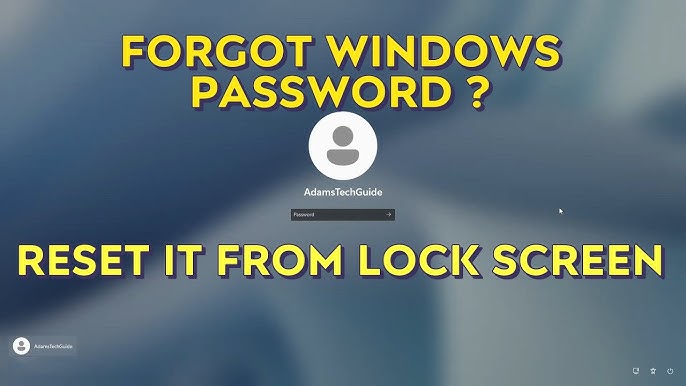
The most reliable method for resetting a local account password in Windows 12 – and frankly, the one I always recommend – is using a password reset disk. This is a USB drive you create before you ever forget your password. It’s a preventative measure, and it’s incredibly effective when you need it. To create one, you’ll need access to the computer while you’re still logged in.
Here’s how to create a password reset disk: open the Control Panel (you can search for it in the Start menu). Navigate to User Accounts, then to 'Change your account password'. On the left-hand side, you’ll see 'Create a password reset disk'. Follow the on-screen instructions, selecting your USB drive when prompted. Windows will write the necessary files to the drive, creating your reset disk. Keep this drive in a safe, memorable location – but not with your password!
When you’re locked out, insert the USB drive. At the login screen, after entering an incorrect password, you should see an option to 'Reset password'. Click this, and the wizard will guide you through the process. You’ll be asked to create a new password. It’s a straightforward process, but it only works if you’ve prepared the disk beforehand. What if you lose the USB drive, or it becomes corrupted? That’s where the other methods come into play. A corrupted disk is a real possibility, so consider creating multiple disks and storing them in separate locations.
A potential issue arises if the USB drive itself is failing. Windows might not recognize it, or the reset wizard might encounter errors. Try a different USB port, or a different USB drive altogether. If none work, you'll need to resort to other recovery options. It’s also worth remembering that this method only works for local accounts, not Microsoft accounts.
Using Another Administrator Account
If you have another administrator account on the computer, resetting a forgotten password becomes significantly easier. This method requires that you’ve already set up another account with administrative privileges before you get locked out. It's a common setup in households or small businesses, but it’s not a universal solution.
To reset the password, log in with the other administrator account. Then, right-click on the Start button and select 'Computer Management'. In the Computer Management window, expand 'Local Users and Groups', then select 'Users'. Locate the account with the forgotten password, right-click on it, and select 'Set Password'. You’ll be prompted to enter a new password. Confirm the new password, and you’re done.
However, there are limitations. Obviously, this method is useless if all accounts are locked or if you don’t have another administrator account. It's also not the most secure practice to have multiple administrator accounts – it increases the attack surface. If all accounts are locked, you'll need to explore more technical recovery options. The presence of multiple admin accounts should be regularly reviewed for security reasons.
It’s important to note that this method only changes the password on the local machine. If the account is also linked to a Microsoft account, you’ll need to reset the password through Microsoft’s online recovery process as well.
Resetting via command prompt
Resetting a password using the command prompt is a more technical approach, and it requires booting into Safe Mode. This method bypasses the normal login screen and allows you to access system tools with elevated privileges. It's powerful, but it also carries a risk if you’re not comfortable with command-line interfaces.
First, you need to boot into Safe Mode. The process for doing this in Windows 12 may differ slightly from previous versions, but generally, you’ll need to repeatedly interrupt the startup process (by pressing the power button during boot) until you’re presented with the Advanced Startup Options menu. From there, navigate to 'Troubleshoot' > 'Advanced options' > 'Startup Settings' and select 'Enable Safe Mode'.
Once in Safe Mode, open the command prompt as an administrator. You can search for 'cmd' in the Start menu, right-click on 'Command Prompt', and select 'Run as administrator'. In the command prompt window, type the following command: `net user [username] [new password]`. Replace '[username]' with the actual username of the account you want to reset, and '[new password]' with the desired new password. For example: `net user JohnDoe Pa$$wOrd123`. Press Enter.
Double-check your spelling before hitting enter. If you mistype the username, the command just won't work, but messing up system files in Safe Mode is a headache you want to avoid. This only works if you can actually get into the command interface through the recovery menus.
Microsoft Account Recovery: Your Online Lifeline
For users who log in to Windows 12 with a Microsoft account, the primary method for password recovery is through Microsoft’s online process. This is the most common scenario for many users, as Microsoft encourages the use of Microsoft accounts for a seamless experience across devices. The recovery process is designed to verify your identity and ensure that only you can regain access to your account.
To initiate the recovery process, go to the Microsoft account recovery page (support.microsoft.com will guide you). You’ll be asked to enter the email address, phone number, or Skype name associated with your account. Microsoft will then present you with several verification options. These typically include sending a security code to your recovery email address or phone number.
It’s crucial to keep your recovery information up-to-date. If you’ve changed your email address or phone number, be sure to update your Microsoft account settings accordingly. Microsoft employs various security measures to prevent unauthorized access, including multi-factor authentication. Enabling two-factor authentication adds an extra layer of security, requiring a code from your phone in addition to your password.
Common issues with account recovery include not having access to the recovery email address or phone number. If this happens, Microsoft provides a recovery form that asks for detailed information to verify your identity. This process can take several days. Another issue is forgetting the answers to security questions (ironically!). The Microsoft recovery process is generally reliable, but it can be frustrating if you encounter problems. Having accurate and up-to-date recovery information is the best way to avoid these issues.
The last resort: resetting the PC
If all other methods fail, the 'Reset this PC' feature in Windows 12 is a last resort. This option allows you to reinstall Windows, effectively wiping your system and restoring it to a factory-fresh state. However, it’s a drastic measure that should only be used when you’ve exhausted all other possibilities.
When you initiate the reset process (Settings > System > Recovery > Reset this PC), you’ll be presented with two options: 'Keep my files' and 'Remove everything'. 'Keep my files' will reinstall Windows while preserving your personal files (documents, pictures, etc.), but it will remove installed applications. 'Remove everything' will wipe the entire drive, deleting all your files and applications. Choose carefully!
Before performing a reset, always back up your important data. A reset is a destructive process, and you could lose everything if you don’t have a backup. Be prepared to reinstall your applications and reconfigure your settings after the reset is complete. A failed reset can sometimes leave your system unbootable, in which case you might need to use Windows 12 installation media (a USB drive or DVD) to reinstall the operating system.
The 'Remove everything' option is particularly thorough and may be necessary if your system is severely corrupted. However, it’s also the most disruptive. If you’re able to keep your files, that’s generally the preferred option. Remember that even with the 'Keep my files' option, you’ll still need to reinstall your applications and potentially restore some settings.
Preventative Measures: Securing Your Future Login
The best way to avoid the frustration of a password reset is to take preventative measures. Start with a strong, unique password. Avoid using easily guessable information like your birthday or pet’s name. A password manager can help you generate and store complex passwords securely. I personally use Bitwarden, but there are many good options available.
Creating a password reset disk is also essential, as we discussed earlier. This is a simple step that can save you a lot of trouble down the road. Regularly update your recovery information for your Microsoft account, ensuring that your recovery email address and phone number are current.
Consider enabling two-factor authentication for your Microsoft account. This adds an extra layer of security, making it much more difficult for someone to gain access to your account even if they know your password. Windows Hello, with its biometric login options (fingerprint or facial recognition), offers a convenient and secure alternative to passwords. If your hardware supports it, it’s worth exploring.
Finally, be mindful of phishing attempts and other social engineering tactics. Never click on suspicious links or provide your password to untrusted sources. A proactive approach to security is the best defense against password lockouts and account compromise.
- Use a strong, unique password.
- Create a password reset disk.
- Keep your recovery information up-to-date.
- Enable two-factor authentication.
- Consider using Windows Hello.



No comments yet. Be the first to share your thoughts!