

How to recover a forgotten password
If you are locked out of Windows 12, you can usually get back in without wiping your drive. The fix depends on whether you use a local account or a Microsoft account. I'll walk through the steps for both, starting with the easiest recovery options.
Initially, we’ll focus on solutions that don’t require a password reset disk or booting from external media. Those are great options, but not everyone prepares them in advance. We’ll cover resetting local account passwords using security questions (if you set them up), recovering access through your Microsoft account, and even some command-line tricks for the more technically inclined.
Success depends on your initial setup. Microsoft accounts with a linked phone number are the easiest to recover. Local accounts are harder to crack if you didn't set up security questions or a reset disk beforehand. Some of these methods are hit-or-miss depending on your security settings.
Resetting local accounts
If you use a traditional local account on Windows 12, resetting your password can be a bit more involved than with a Microsoft account. The easiest scenario is if you previously configured security questions. During account setup, you might have been prompted to answer questions like "What was your mother’s maiden name?’ or ‘What city were you born in?".
If you remember the answers, Windows 12 should present these questions after several incorrect password attempts. However, the effectiveness of security questions is debatable. They’re often easily guessed or forgotten over time. Don’t rely on them as your sole recovery method. A far better option, if you haven't already, is to create a password reset disk.
A password reset disk is a USB drive you create while you still have access to your account. It stores information that allows you to reset your password even if you forget it. To create one, search for "create a password reset disk’ in the Windows search bar and follow the on-screen instructions. It"s a small step now that can save you a lot of trouble later.
Keep in mind that password reset disks only work for local accounts, not Microsoft accounts. Also, if someone gains access to your reset disk, they can also reset your password, so keep it secure.
- Answer your pre-set security questions after a few failed login attempts.
- Use a USB password reset disk if you created one before getting locked out.
- Windows Recovery Environment (WinRE): A more advanced method covered later.
Microsoft account recovery
Recovering a Microsoft account password is generally the most straightforward process, assuming you’ve taken the necessary precautions. The key is having a recovery email address and phone number linked to your account. Microsoft uses these to verify your identity when you can’t access your account.
To begin, navigate to the Microsoft account recovery page: You’ll be prompted to enter the email address, phone number, or Skype name associated with your account. Microsoft will then present you with verification options.
I’ve personally gone through this process several times, and it can be a bit tedious. You might need to answer several security questions, receive a verification code via email or text message, or even provide additional information to prove your identity. The process can take anywhere from a few minutes to a few days, depending on the complexity of your account and the information you’ve provided.
Two-factor authentication (2FA) adds an extra layer of security to your Microsoft account. While it makes recovery slightly more complex, it significantly reduces the risk of unauthorized access. If you have 2FA enabled, you’ll need access to your authenticator app or backup codes to complete the recovery process. Without them, recovery can be significantly more difficult.
If you’re locked out even with the recovery methods, Microsoft provides a more complex account recovery form. This form asks detailed questions about your account usage and history. Be as accurate as possible, as inconsistencies can delay or even prevent recovery.
- Go to the Microsoft account recovery page.
- Enter your account identifier (email, phone, or Skype name).
- Choose a verification method (email, phone, or authenticator app).
- Follow the on-screen instructions to reset your password.
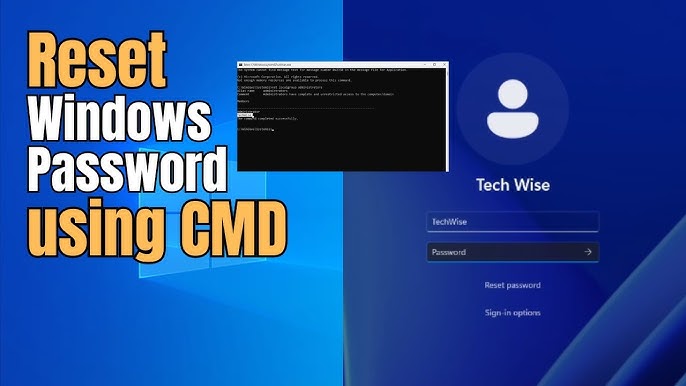
Using the command prompt
This method is for users comfortable with the command line and requires booting into the Windows Recovery Environment (WinRE). It allows you to reset a local account password without a reset disk, but it’s not without risk. Incorrectly typed commands can potentially cause system instability.
First, you need to access WinRE. Restart your computer and repeatedly press the F11 or Shift+Restart key during startup. This should boot you into the recovery environment. If this doesn't work, you may need to consult your computer manufacturer's documentation for specific instructions.
In WinRE, navigate to Troubleshoot > Advanced options > Command Prompt. This will open a command prompt window with administrative privileges. Now, enter the following command: `net user [username] [new password]` replacing `[username]` with the account name and `[new password]` with your desired new password.
Important: Ensure you type the command correctly, including spaces. The password will be displayed in plain text in the command prompt, so be mindful of your surroundings. After executing the command, close the command prompt and restart your computer. You should now be able to log in with your new password.
- Disclaimer: This method is for advanced users only. Incorrect commands can damage your system.
- Command: `net user [username] [new password]`
- Access: Windows Recovery Environment (WinRE) Command Prompt.
Net User Command Syntax for Password Reset
The net user command is a built-in Windows utility that allows administrators to manage user accounts and passwords from the Command Prompt. This command must be run with administrator privileges to reset passwords for other users. Here are the essential syntax patterns and examples for different scenarios:
# Basic syntax for resetting a user password
net user [username] [new_password]

# Example 1: Reset password for user "john"
net user john NewPassword123

# Example 2: Reset password for username with spaces (use quotes)
net user "John Smith" NewPassword123

# Example 3: Reset password and prompt for new password (more secure)
net user john *

# Example 4: Reset password for current user (if you know the username)
net user %username% NewPassword123

# Additional useful parameters:
# /active:yes - Activate the user account
net user john NewPassword123 /active:yes

# /expires:never - Set password to never expire
net user john NewPassword123 /expires:never

# /passwordchg:yes - Allow user to change password
net user john NewPassword123 /passwordchg:yes

# Complete example with multiple parameters
net user "John Smith" NewPassword123 /active:yes /expires:never /passwordchg:yes
Important notes: When using the net user command, usernames containing spaces must be enclosed in quotation marks. The asterisk (*) parameter prompts for password input without displaying it on screen, which is more secure than typing the password directly in the command line. Always run Command Prompt as Administrator when attempting to reset passwords for other user accounts. These commands work on Windows 10, Windows 11, and should be compatible with Windows 12 when available.
Troubleshooting Common Login Issues
Sometimes, the problem isn’t a forgotten password; it’s a different login issue altogether. Corrupted user profiles can prevent you from logging in, even if you know your password. You might see a blank desktop or receive an error message. Windows often creates temporary profiles in these situations.
Problems with the Windows login service can also cause login failures. This service is responsible for authenticating users and loading their profiles. If it’s not running correctly, you won’t be able to log in. Third-party software, like security suites or system optimizers, can sometimes interfere with the login process.
System Restore is a useful tool for reverting your system to a previous working state. If you recently installed software or made changes to your system, System Restore might be able to undo those changes and resolve the login issue. However, System Restore doesn’t affect your personal files, so it’s a relatively safe troubleshooting step to try.
I’m not sure how effective these methods will be in every situation, but they’re worth trying if you’re experiencing login problems. It’s always a good idea to create a system restore point before making significant changes to your system.
- Corrupted User Profile: May result in a blank desktop or errors.
- Login Service Issues: Can prevent authentication.
- Software Conflicts: Third-party apps may interfere.
- System Restore: Revert to a previous working state.
When All Else Fails: Resetting Windows
If you’ve exhausted all other options, resetting Windows 12 is the last resort. This will erase your data, so it should only be used as a final option. Windows 12 offers two main reset options: "Keep my files’ and ‘Remove everything."
"Keep my files’ attempts to preserve your personal files while reinstalling Windows. However, it will still remove installed applications and settings. ‘Remove everything" completely wipes your hard drive and reinstalls Windows from scratch. This is the most thorough option, but it results in complete data loss.
To access the reset options, boot into the Windows Recovery Environment (WinRE) as described earlier. Navigate to Troubleshoot > Reset this PC. Follow the on-screen instructions to choose a reset option and begin the process. Microsoft provides detailed documentation on resetting Windows here:
Before resetting, back up any important data if possible. If you can’t access your files directly, consider using a bootable Linux distribution to copy them to an external drive.
Preventing Future Lockouts
The best way to deal with a forgotten password is to prevent it from happening in the first place. Create strong, unique passwords for all your accounts. A password manager can help you generate and store complex passwords securely. I personally use Bitwarden; it's open-source and offers a generous free tier.
Enable two-factor authentication (2FA) whenever possible. This adds an extra layer of security, requiring a code from your phone or authenticator app in addition to your password. Regularly create password reset disks for your local accounts. It's a small investment of time that can save you a lot of headaches.
Finally, consider setting up multiple administrator accounts on your computer. This provides a backup login option if one account becomes inaccessible. It’s a simple precaution that can prevent a complete lockout.
- Strong Passwords: Use a password manager like Bitwarden.
- Two-Factor Authentication: Enable 2FA wherever available.
- Password Reset Disks: Create them regularly for local accounts.
- Multiple Admin Accounts: Provide a backup login option.
No comments yet. Be the first to share your thoughts!