

Start with the right recovery page
The first step in recovering a password is navigating to the correct official portal for your account provider. Using the wrong link is the most common mistake people make, often leading to phishing sites that steal credentials instead of restoring access. Always verify the URL matches the official provider domain (google.com, microsoft.com, apple.com) to avoid phishing sites.
For Google accounts, the dedicated password manager and recovery hub is located at passwords.google.com. This portal allows you to check the strength of saved passwords and initiate recovery if you are locked out. If you are using a Microsoft account, go directly to the Microsoft support page for resetting a forgotten password. This page guides you through identity verification steps specific to Microsoft's security protocols.
Apple users should visit iforgot.apple.com to begin the recovery process. This is the centralized tool for managing Apple ID security, including password resets and two-factor authentication issues. By starting at these specific, verified destinations, you bypass the guesswork and ensure your recovery request is processed securely by the correct provider.

Recover a Google account password
For most Recover Passwords for Apple, Google, and Microsoft Accounts glitches, start with the least invasive restart and then retest the exact feature that failed. If the display froze, confirm touch response, climate controls, navigation, audio, and phone pairing after the reboot. If the issue was connectivity, test Wi-Fi, cellular signal, Bluetooth, and the companion app separately so one weak connection does not look like a full system failure. If the problem returns immediately, look for a pattern instead of repeating the same reset. Recent updates, low signal, a newly paired phone, a USB accessory, or a profile sync issue can all make the failure look random. Remove one variable at a time, then give the system a few minutes to reload before judging the result. Escalate when the screen stays black, the same warning returns, basic controls are unavailable, or the reboot only works for a few minutes. At that point the most useful thing you can provide is a short log: time, software version, exact symptom, what reset you tried, and whether the car or device was parked and awake.
-
Park and note the symptomPut the system in a safe idle state, then write down whether Recover Passwords for Apple, Google, and Microsoft Accounts is frozen, blank, slow, disconnected, or only failing in one app.
-
Try the normal restart firstUse the standard screen or interface restart before changing settings, deleting profiles, or disconnecting accessories.
-
Retest one feature at a timeCheck touch response, audio, navigation, phone pairing, Wi-Fi, and app access separately so the failing path is clear.
-
Escalate repeated failuresContact official support when the screen stays black, warnings appear, or the same issue returns after a clean restart.
Reset a Microsoft account password
Recovering a Microsoft account follows a standardized verification workflow. Microsoft prioritizes security by requiring proof that you control the registered email address or phone number. This process relies on temporary security codes sent to your trusted contact methods rather than immediate access to the account itself.
The first step is navigating to the sign-in portal. Locate and select the Forgot password? link on the Microsoft login screen. Enter the full email address, phone number, or Skype ID associated with the account. Microsoft will then guide you through the available verification options based on your account history.
Microsoft sends a six-digit security code to your alternate email address or mobile phone. Check the inbox of your registered secondary contact method. Enter the code exactly as shown in the verification box on the website. If you do not receive the code within a few minutes, check your spam folder or request a new code.
If you previously set up security questions, you will be prompted to answer them after entering the code. These questions were chosen during the initial account setup. Provide the exact answers you created. Note that these questions are not used for every reset; they appear only if your account profile includes them.
Once identity is confirmed, you will be directed to a password creation page. Enter a new, strong password that you have not used before. Microsoft requires a mix of uppercase and lowercase letters, numbers, and symbols. Confirm the new password by typing it a second time to ensure accuracy.
Navigate back to the Microsoft sign-in page. Enter your email address and the newly created password. If successful, you will gain access to your account services. It is advisable to update your recovery email and phone number immediately to ensure future access.
If you cannot access your recovery email or phone number, the automated process may fail. In these cases, Microsoft may offer a form for account recovery specialists to review. This manual process takes longer and requires providing additional proof of ownership, such as previous passwords or transaction receipts.
Regain access to an Apple ID
Recover Passwords for Apple, Google, and Microsoft Accounts works best as a clear sequence: define the constraint, compare the realistic options, test the tradeoff, and choose the path with the fewest hidden costs. That order keeps the advice usable instead of decorative. After each step, pause long enough to check whether the recommendation still fits the reader's actual situation. If it depends on perfect timing, unusual access, or a best-case budget, include a simpler fallback.
Fix common recovery errors
When you hit a wall during password recovery, it usually stems from one of three specific blocks: outdated contact info, failed identity verification, or system delays. Knowing how to bypass these roadblocks saves hours of frustration.
Outdated recovery email or phone
If the recovery email or phone number on file is no longer active, the standard reset link will bounce. This is the most frequent failure point. You cannot bypass this by guessing; you must update the contact method through the account recovery form. Google and Microsoft both provide dedicated forms for users who have lost access to their secondary verification methods. Expect this process to take several days as the support team verifies your identity manually.

Failed identity verification checks
Security systems flag recovery attempts when they detect unusual activity, such as a new device or location. If you are asked for proof of identity and fail the initial check, do not immediately retry the same incorrect answer. Repeated failures can lock your account for longer periods. Instead, wait 24 hours before attempting the recovery form again, and ensure you provide the oldest, most accurate account details you can recall, such as the original creation date or previous passwords.
System processing delays
Sometimes the error is not on your end. Large providers like Apple and Google process recovery requests in batches to prevent fraud. If you submitted a request and see no email, check your spam folder first. If it is not there, the request is likely still in the queue. Avoid clicking "forgot password" repeatedly, as this resets the timer and pushes your request further back in the line. Patience is the only fix here.
Secure your accounts after recovery
Recovering a password is only half the battle. Once you are back in, you must lock the door behind you to prevent future lockouts and stop attackers from slipping back in. Treat this as a system reset, not just a password change.
Enable two-factor authentication
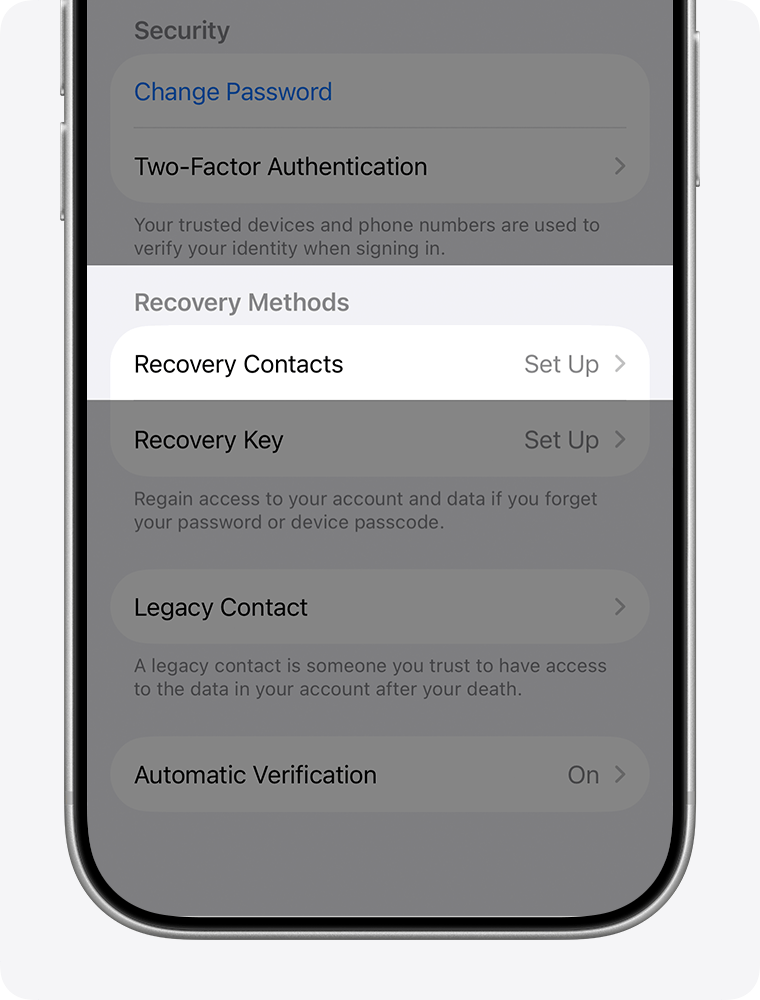
Two-factor authentication (2FA) adds a second layer of defense. Even if a thief has your new password, they cannot access your account without the second factor, such as a code from your phone or a hardware key. Turn this on immediately for Apple, Google, and Microsoft accounts. It is the single most effective step to secure your accounts after recovery.
Update recovery options
Hackers often use stolen recovery emails or old phone numbers to bypass security questions. Check your recovery settings to ensure only your current email and phone number are listed. Remove any outdated contacts or devices that no longer belong to you.
Audit active sessions
Log out of all other devices. This forces any unauthorized access to end immediately. When you log back in on your trusted devices, the attacker is locked out. Check the "Active Sessions" or "Devices" section in your account settings to verify no unknown devices remain connected.
Use a password manager
Stop reusing passwords across different services. A password manager generates and stores unique, complex passwords for every account. This ensures that if one service is breached, your Apple, Google, or Microsoft accounts remain safe. Services like Google Password Manager can help you identify weak or reused passwords.
-
Enable two-factor authentication on all accounts
-
Update recovery email and phone number
-
Log out of all unknown devices
-
Switch to a password manager
-
Scan for malware on your device
No comments yet. Be the first to share your thoughts!