
Prepare for a reset
A factory reset wipes your Galaxy S26 clean. It is the most effective way to fix persistent software bugs, but you lose every photo, contact, and app on the device. Back up everything before you start.
There are several backup options available to you. Samsung Cloud provides a convenient way to back up many of your Samsung-specific settings and data. Smart Switch, Samsung’s transfer tool, offers more comprehensive backups, including the ability to save everything to a computer or external drive. And, of course, your Google account automatically syncs a lot of your information. We’ll examine each of these in detail.
Before you even think about resetting, double-check your Samsung account status. Ensure you know the associated email address and password. This is important for accessing certain features after the reset and potentially bypassing security measures like Factory Reset Protection. Knowing this information upfront can save you a lot of headaches later on. It’s a small step that can prevent a big problem.
If you skip the backup, you lose your data permanently. A reset is a destructive process, so verify your files are saved to the cloud or a physical drive before clicking confirm.
Samsung Cloud and Smart Switch
Samsung Cloud is the easiest built-in option. It handles photos, contacts, and notes automatically. You can find it under 'Accounts and backup' in the settings menu. Keep in mind that the free tier is only 15GB, which is usually too small for 4K video libraries.
What gets backed up? Samsung Cloud focuses on Samsung-specific data. Your Samsung apps and their associated data are included, along with your call and message history. It’s a good option for preserving your Samsung experience, but it doesn’t cover everything. It’s best used in conjunction with other backup methods. The speed of backups depends on your internet connection.
Smart Switch is a more robust option, particularly if you want a local backup. You can connect your Galaxy S26 to a computer using a USB cable and use the Smart Switch software to create a complete backup. This backup can then be saved to your computer’s hard drive or an external drive. This is useful if you don’t want to rely on cloud storage or if you have a large amount of data.
A key advantage of Smart Switch is its ability to restore your backup to a different Samsung device. If you’re upgrading to a newer Galaxy phone, Smart Switch makes the transition seamless. It can even transfer certain settings and data between different Android versions. The wireless transfer feature is convenient, but it’s generally slower than a wired connection. Smart Switch can be downloaded from the Samsung website.
Consider this: if you’re planning to sell or trade in your Galaxy S26, a Smart Switch backup to an external drive is the safest way to ensure your data is completely removed from the device and you have a copy for yourself.
- Plug the S26 into your computer with a USB cable.
- Download and install Samsung Smart Switch on your computer.
- Launch Smart Switch and follow the on-screen instructions to create a backup.
- Select the data you want to back up.
- Choose a backup location (computer or external drive).
- Start the backup process.
Google account sync
Most Galaxy S26 users rely on their Google account for backups, and for good reason. Google automatically syncs a significant amount of your data, including contacts, calendar events, Gmail, and app data. If you’re signed into your Google account on your phone, much of your information is already being backed up in the cloud. It’s a passive process, which makes it convenient.
However, it's important to understand what Google syncs. Contacts, calendar, and Gmail are fully backed up. Google Photos will sync your photos and videos if you’ve enabled that feature. App data backup is a bit more complex. It depends on whether the app developer has enabled data backup for their app. Not all apps support this feature. Some apps only back up settings, while others back up more extensive data.
There’s a difference between app data backup and a full app backup. App data backup typically includes things like game progress, preferences, and login information. A full app backup, which is less common, would include the app itself. To verify your Google account sync settings, go to Settings > Accounts and backup > Manage accounts > Google, and ensure that the services you want to sync are toggled on.
Keep in mind that Google provides 15GB of free storage shared across Google Drive, Gmail, and Google Photos. If you exceed this limit, you’ll need to purchase additional storage. It’s a good idea to periodically check your Google storage usage to avoid running out of space.
- Go to Settings > Accounts and backup > Manage accounts > Google.
- Ensure Contacts, Calendar, and Gmail are synced.
- Verify Google Photos backup is enabled.
- Review Google storage usage:
Try a soft reset first
Before resorting to a factory reset, try a soft reset. This is essentially a reboot of your Galaxy S26. It closes all running apps and restarts the operating system. It’s a quick and easy fix for minor glitches, performance issues, or frozen apps. It doesn’t erase any of your personal data, so it’s a safe first step.
You can perform a soft reset in a couple of ways. The most common method is to press and hold the power button until the power menu appears, then select "Restart". You can also access the power menu from the quick settings panel by swiping down from the top of the screen. If your phone is frozen and unresponsive, you may need to press and hold the power button for a longer period – typically 10-20 seconds – to force a restart.
If your phone is completely frozen, and the power button doesn’t respond, don’t panic. Try a forced restart: press and hold the Power button and Volume Down button simultaneously for about 10-15 seconds. This usually forces the phone to reboot. This is a last resort before considering a factory reset.
Factory Reset Through Settings Menu
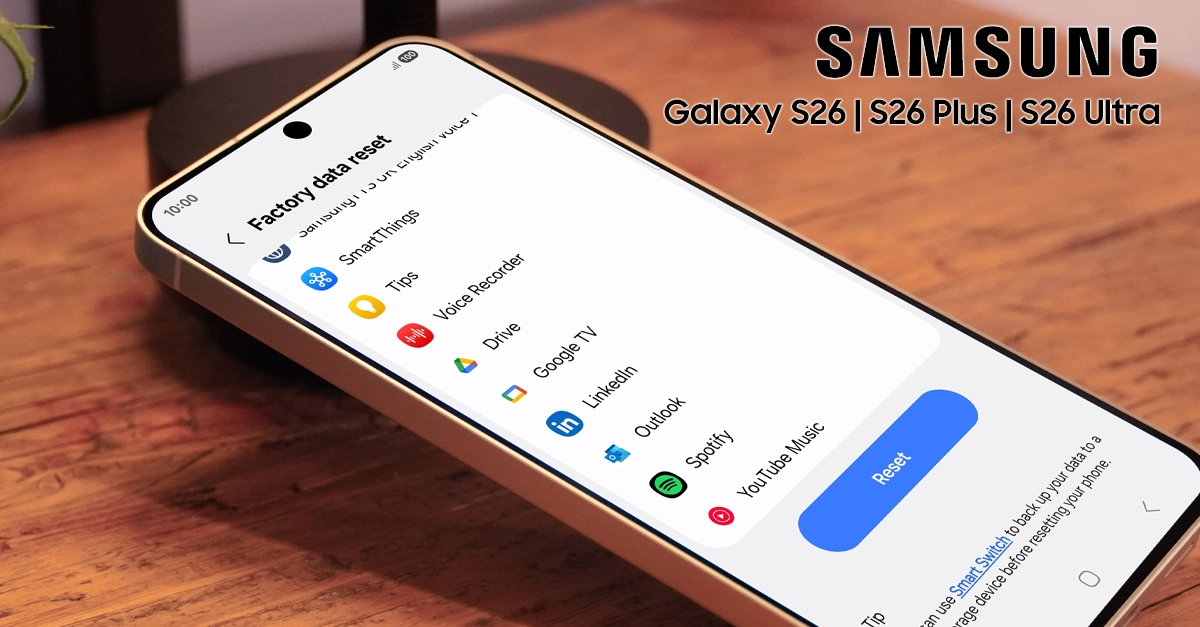
This is the most common way to perform a factory reset on your Galaxy S26. Navigate to the Settings app, then tap on "General management’. From there, select ‘Reset’. You’ll see several options: ‘Reset all settings’, ‘Reset network settings’, and ‘Factory data reset". Each option serves a different purpose.
"Reset all settings’ reverts your preferences – Wi-Fi passwords, Bluetooth connections, display settings, and sound settings – to their default values. It doesn’t erase your personal data. ‘Reset network settings’ resets your Wi-Fi, mobile data, and Bluetooth settings. This can be helpful if you’re experiencing connectivity issues. It also doesn"t erase your data. Both of these options are less drastic than a full factory reset.
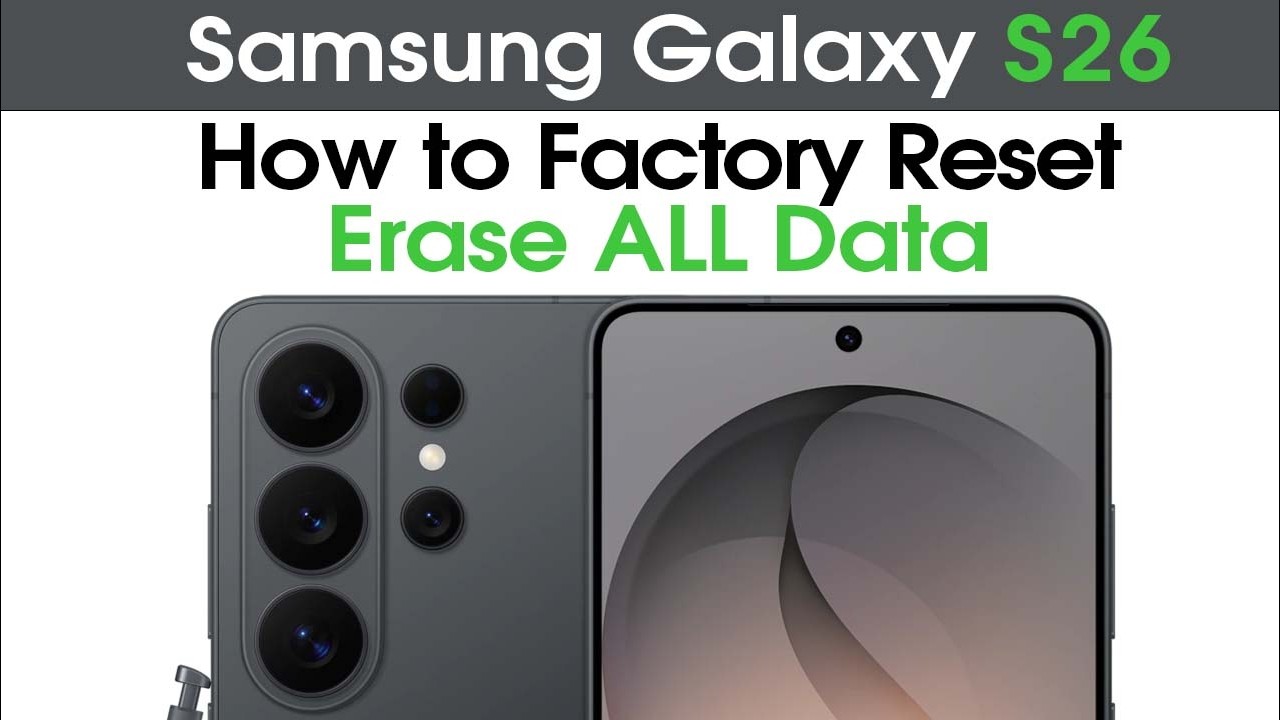
"Factory data reset’ is the option you want if you’re trying to erase all personal data from your phone. This will delete everything – your photos, videos, contacts, apps, and settings. It"s irreversible, so make sure you have a backup before proceeding. The phone will ask you to confirm your decision multiple times. This is your last chance to back out.
After selecting "Factory data reset" and confirming your choice, the phone will begin the reset process. This can take several minutes. Do not interrupt the process. Do not turn off the phone. Once the reset is complete, the phone will restart and display the initial setup screen, as if it were a new device. The first boot after the reset may take longer than usual.
Be aware that the exact menu names and locations may vary slightly depending on your Android version and Samsung’s software updates. However, the general process remains the same: Settings > General management > Reset > Factory data reset. Double-check the description of each reset option before proceeding, to make sure you're choosing the right one.
Before initiating the factory reset, remove your Google account and Samsung account from the device. This can simplify the process and prevent potential issues with Factory Reset Protection (FRP). You can re-add these accounts during the initial setup after the reset.
Hard reset for frozen screens
If your Galaxy S26 is frozen and you can’t access the Settings menu, you’ll need to perform a hard reset. This involves using a combination of physical buttons to access the recovery menu. The button combination can vary slightly depending on the model, so it’s important to find the correct sequence for your specific device. Serg Tech's 2026 video on YouTube details this process for the S26.
Generally, the hard reset process involves pressing and holding the Power button, Volume Up button, and B2Bixby button (if your phone has one) simultaneously. Once the Samsung logo appears, release all buttons. This should boot the phone into recovery mode. From the recovery menu, use the volume buttons to navigate and the power button to select options.
In the recovery menu, select "Wipe data/factory reset’. This will initiate the factory reset process. Confirm your choice by selecting ‘Factory data reset’ again. The process will take several minutes. Once complete, select ‘Reboot system now" to restart your phone. Be extremely cautious when navigating the recovery menu, as incorrect selections can cause further issues.
Potential issues during a hard reset include getting stuck in the recovery menu or encountering error messages. If you encounter an error message, try restarting the phone and repeating the hard reset process. If the issue persists, contact Samsung support. A failed hard reset could indicate a more serious hardware or software problem.
This method is more advanced and carries a slightly higher risk than a soft reset or a reset through the Settings menu. Proceed with caution and only if you’re comfortable with the process. It’s generally recommended to try all other troubleshooting steps before resorting to a hard reset.
Troubleshooting Reset Issues
Unfortunately, factory resets don't always go smoothly. One common problem is a boot loop, where the phone repeatedly restarts without fully booting up. This can be caused by corrupted system files or a failed reset process. Try performing a hard reset again. If that doesn’t work, you may need to use a computer and Samsung’s software to re-flash the firmware.
Error messages during the reset process can indicate a variety of issues. Note the specific error message and search online for solutions. Samsung’s support website and online forums are good resources. A failed restore can occur if the backup file is corrupted or if there’s a problem with the connection. Try restoring from a different backup, if available.
Factory Reset Protection (FRP) is a security feature that prevents unauthorized access to your phone if it’s lost or stolen. If you’ve forgotten the Google account credentials associated with your phone, FRP can lock you out after a reset. To bypass FRP, you’ll need to enter the original Google account email address and password. If you can’t remember them, you’ll need to contact Google support.
If you’ve tried all the troubleshooting steps and are still unable to resolve the issue, contact Samsung support. They may be able to provide more specific guidance or offer repair options. Be prepared to provide details about the problem, the steps you’ve already taken, and your phone’s model number and serial number.
It’s important to remember that a factory reset is a drastic measure and should only be used as a last resort. Before proceeding, make sure you have a complete backup of your data and that you understand the risks involved. If you’re unsure about any part of the process, seek assistance from a qualified technician.
Samsung Backup & Restore Options for Factory Reset
| Backup Method | Speed | Data Completeness | Ease of Use | Considerations |
|---|---|---|---|---|
| Samsung Cloud | Generally fast, dependent on internet connection | Good for core Samsung apps and settings; may not back up *all* data. | Relatively easy if you're already signed into your Samsung account. | Requires a Samsung account. Storage limits may apply, potentially requiring paid storage for large backups. |
| Smart Switch (to Computer) | Faster than cloud backup, limited by transfer cable/USB port speed. | Typically the most complete backup, including apps, data, and settings. | Requires a computer and USB cable. Straightforward software interface. | Requires sufficient storage space on your computer. May require installing Smart Switch software. |
| Google Backup | Moderate speed, dependent on internet connection and Google Drive storage. | Good for Google account data (contacts, calendar, photos). App data backup varies by app. | Easy if you're already using Google services and have Google Backup enabled. | Reliant on your Google account and available Google Drive storage. Data restoration may not be fully consistent across all apps. |
| Smart Switch (to SD Card) | Speed dependent on SD card write speed. | Similar completeness to backing up to a computer, preserving apps, data, and settings. | Requires a compatible microSD card and a card reader (if restoring to a new device). | SD card must have sufficient storage capacity. SD card itself could be a point of failure. |
| No Backup | Fastest - skips the backup process entirely. | No data is preserved. | Simplest - no action required. | Data loss is complete. Only recommended if you don't need any data from the previous device state. |
Illustrative comparison based on the article research brief. Verify current pricing, limits, and product details in the official docs before relying on it.
No comments yet. Be the first to share your thoughts!