

when to reset your galaxy s26
A factory reset wipes your Galaxy S26 back to its original settings. It deletes your photos, apps, and accounts, so I only recommend doing this if you have no other choice.
There are several situations where a factory reset becomes the best solution. Persistent software glitches that you can’t resolve through normal troubleshooting steps are a prime example. If your S26 is experiencing frequent crashes, freezes, or unexpected behavior, a reset can often fix these issues by eliminating corrupted system files. Another common reason is preparing the device for sale or gifting; you want to ensure all your personal information is removed.
Severe malware infections can also necessitate a factory reset. While antivirus software is helpful, some malicious software deeply embeds itself within the system, making complete removal difficult. A reset provides a guaranteed way to eliminate the threat. Finally, and perhaps most commonly, a factory reset is used when you’ve forgotten your screen lock password, PIN, or pattern.
Back up everything before you start. While a reset usually leaves SD card data alone, I wouldn't risk it. Move your files to a cloud service or a physical drive first.
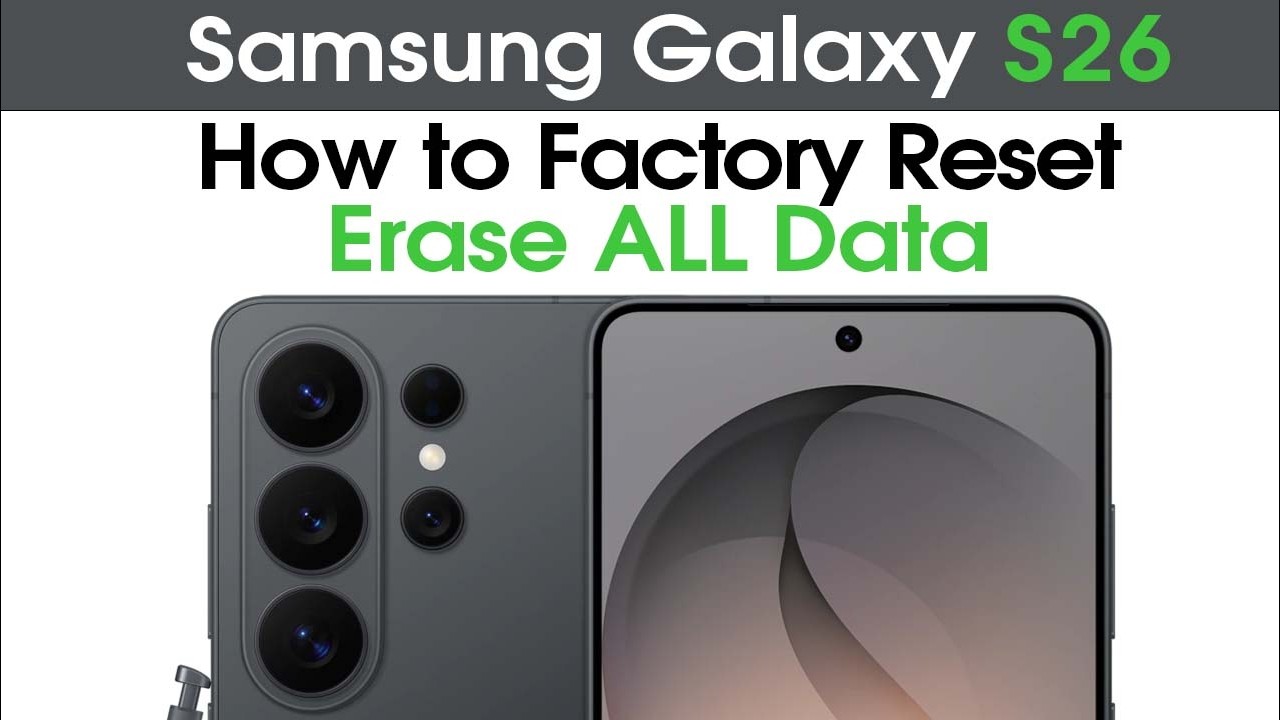
backing up your data
Before you even think about hitting that reset button, you need a solid backup strategy. Losing photos, contacts, and important files is easily avoided with a little preparation. Samsung offers several options, as does Google, and you can also back up directly to a computer.
Samsung Cloud is a convenient option, especially if you're deeply integrated into the Samsung ecosystem. It automatically backs up a significant amount of data, including your Samsung account settings, call logs, messages, and even some app data. However, the free storage tier is limited – 15GB – and you may need to purchase additional storage if you have a lot of data to save. Be aware that Samsung occasionally changes its cloud storage policies, so it’s good to check the current terms.
Google Drive is another excellent choice, particularly for photos, videos, and contacts. Google Photos automatically backs up your photos and videos to your Google account, and Google Contacts syncs your contact information. This is especially useful if you switch between Android devices. You get 15GB of free storage shared across Google Drive, Gmail, and Google Photos.
Samsung’s Smart Switch is a powerful tool for backing up your entire device to a computer. You'll need a USB cable and the Smart Switch software installed on your PC or Mac. It creates a complete backup of your apps, settings, messages, photos, and more. This is a good option if you want a local copy of your data, but it requires a computer and sufficient storage space. One limitation is that restoring from Smart Switch might not be perfect for all apps, and some app-specific data might be lost.
A critical caution: if you are locked out of your Samsung account, backing up to Samsung Cloud might actually complicate things. If you can't access your account to restore the backup, your data will be inaccessible. Consider Google Drive or Smart Switch in this scenario. Always have a secondary backup option in place, just in case.
how to recover your password without a reset
Before resorting to a factory reset to regain access to your Galaxy S26, explore available password recovery options. These aren’t guaranteed to work, but they can save you the hassle of a full reset and data loss. Samsung provides a 'Find My Mobile' service that can be incredibly useful, and Google offers recovery options if your account is linked.
Samsung’s 'Find My Mobile' service allows you to remotely unlock your device if you’ve forgotten your screen lock. You'll need to have a Samsung account registered on your phone and have 'Remote unlock' enabled in the settings before you get locked out. You can access Find My Mobile through a web browser at findmymobile.samsung.com. If successful, this is the quickest and easiest way to regain access without data loss.
If your Galaxy S26 is linked to a Google account, you can attempt a password reset through Google's account recovery process. Go to accounts.google.com and follow the steps to verify your identity. This usually involves answering security questions or receiving a verification code via email or SMS. If you can successfully recover your Google account, you might be able to unlock your device, depending on your security settings.
Unfortunately, these methods aren’t always successful. If you haven't enabled 'Remote unlock' in Find My Mobile or can’t verify your Google account, you may have no choice but to perform a factory reset. It’s a frustrating situation, which is why proactive security measures – like remembering your password and enabling remote unlock – are so important.
the standard reset method
If password recovery fails, the standard factory reset method is your next option. This is done directly through the phone’s settings menu, assuming you can access them. The process is relatively straightforward, but it's important to follow the steps carefully.
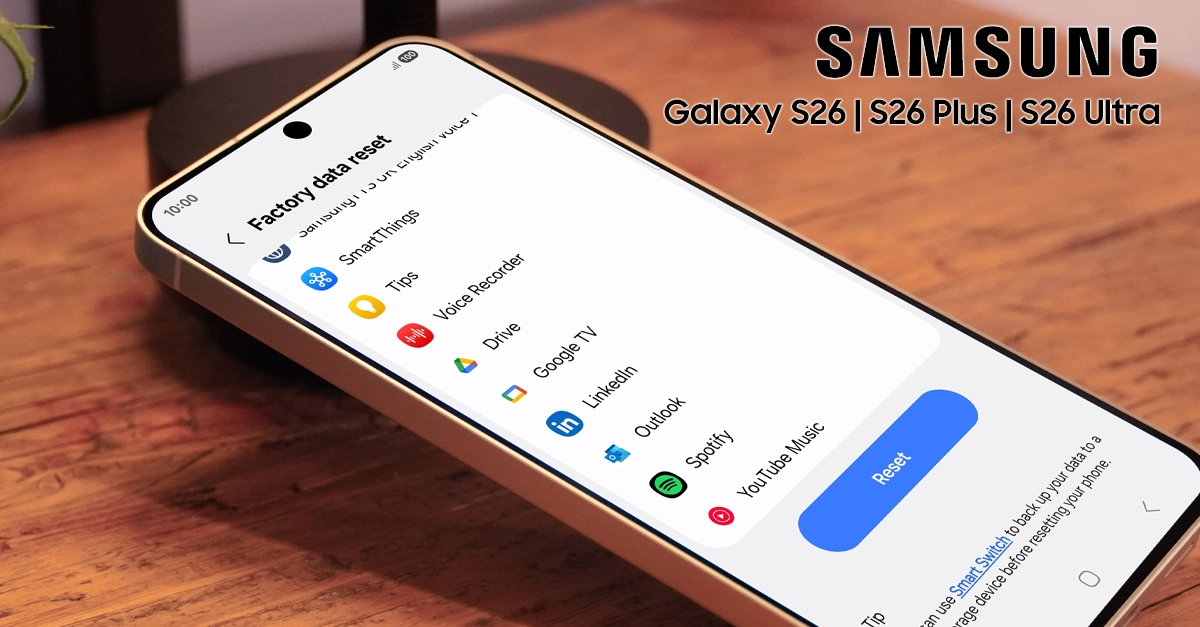
First, navigate to Settings > General management > Reset. The exact wording may vary slightly depending on your software version, but this is the general path. Then, select Factory data reset. You’ll be presented with a summary of what will be deleted – your data, Google account information, and installed apps. Read this carefully.
You’ll likely be prompted to enter your PIN, pattern, or password to confirm your identity. After that, tap Reset at the bottom of the screen. The phone will begin the reset process, which can take several minutes. It will likely restart multiple times during this process – this is normal. Do not interrupt the process by turning off the phone.
Once the reset is complete, your Galaxy S26 will boot up as if it were new. You'll be greeted with the initial setup screens, prompting you to select your language, connect to Wi-Fi, and sign in to your Google account. This is where you can restore your data from a previously created backup.
using recovery mode
If your Galaxy S26 won't boot normally – perhaps it's stuck in a boot loop or won't respond at all – you can perform a factory reset using Recovery Mode. This method is more technical and carries a slightly higher risk if not done correctly, so pay close attention to the instructions.
Entering Recovery Mode typically involves a specific button combination. For the Galaxy S26, the common method is to turn off the device completely. Then, press and hold the Volume Up button and the Power button simultaneously. Continue holding both buttons until the Samsung logo appears and the Recovery Mode screen loads. Note that the exact button combination could vary slightly depending on your carrier or model, so checking specific online resources for the S26 is recommended.
Once in Recovery Mode, you’ll navigate using the Volume Up and Volume Down buttons to move between options, and the Power button to select an option. Use the Volume Down button to highlight 'Wipe data/factory reset' and then press the Power button to select it. You’ll be asked to confirm your decision – select 'Factory data reset' using the same method.
The phone will now begin the factory reset process. This can take longer than the standard reset method. Again, do not interrupt the process. Once complete, you’ll be returned to the Recovery Mode menu. Select 'Reboot system now' to restart your Galaxy S26. Be extremely careful when using Recovery Mode. Selecting the wrong option could potentially brick your device, so only proceed if you are confident in your understanding of the process.
Post-Reset Security: Setting Up Your S26
Once the phone restarts, you need to lock it down again. Don't just rely on a basic PIN; set up the fingerprint scanner and double-check your Google security settings immediately.
First, set a strong screen lock – a PIN, pattern, or password – that’s difficult to guess. Consider using biometric authentication (fingerprint or facial recognition) for added convenience and security. Next, re-enable 'Find My Mobile' in the settings. This allows you to remotely locate, lock, or wipe your device if it’s lost or stolen.
Review your Google account security settings. Enable two-factor authentication (2FA) for an extra layer of protection. This requires a verification code from your phone or email in addition to your password when signing in. Also, carefully review app permissions to ensure apps only have access to the data they need.
Regularly update your device’s software to benefit from the latest security patches. Samsung and Google frequently release updates that address vulnerabilities and improve security. By taking these steps, you can significantly reduce the risk of unauthorized access to your data and keep your Galaxy S26 secure.
Did your Galaxy S26 factory reset go smoothly?
We want to hear about your experience. Share your results so we can help others troubleshoot common issues with the Samsung Galaxy S26 factory reset process. Vote below!
Post-Reset Security Steps
- Enable a strong lock screen - Choose a PIN, password, or biometric lock (fingerprint or face recognition) to prevent unauthorized access.
- Re-enable Find My Mobile - This Samsung service allows you to remotely locate, lock, and wipe your device if it's lost or stolen. Ensure your Samsung account is active.
- Set up Google two-factor authentication - Add an extra layer of security to your Google account, which is often linked to your Samsung device, by requiring a code from your phone or another device during login.
- Review app permissions - Check which permissions each app has been granted (location, camera, microphone, etc.) and revoke any unnecessary access.
- Update your device software - After the reset, check for and install any available software updates to ensure you have the latest security patches and bug fixes.
- Re-connect to trusted Wi-Fi networks - Re-establish connections to your home and work Wi-Fi networks, avoiding public, unsecured networks.
- Review Samsung account security settings - Within your Samsung account, review security information like your recovery email and phone number to ensure they are current.
No comments yet. Be the first to share your thoughts!