

When to reset your headset
If your Vision Pro 2 is lagging, freezing, or just acting weird, a reset is usually the fastest fix. You'll also need to do this if you're selling the headset, otherwise the next owner is going to have access to your apps and private data.
Another common reason for a reset is dealing with account issues. If you’ve forgotten your Apple ID password, or are having trouble syncing data, a reset can sometimes help. However, it's important to understand there are different levels of resets. A simple restart, often called a "soft reset’, is less drastic than a full ‘factory reset".
A soft reset is like restarting your iPhone; it closes all running applications and clears temporary files. A factory reset, on the other hand, erases everything on the device, returning it to its original, out-of-the-box state. This is a more significant step and should be considered carefully. Because of the complete data wipe, understand that a factory reset means you’ll lose all your personal settings, downloaded apps, and stored data unless you have a recent backup.
Soft reset vs. factory reset
Let's break down the differences between a soft reset and a factory reset. A soft reset simply restarts the system. It's useful for minor glitches – an app that's frozen, a temporary slowdown, or a display that’s acting up. To perform a soft reset on the Vision Pro 2, you typically hold down the power button and the volume down button simultaneously until the screen goes black and the Apple logo reappears.
A factory reset is a much more comprehensive process. It completely wipes the device, removing your Apple ID, all accounts, downloaded apps, and personal settings. It’s the equivalent of a "clean slate’ and should be reserved for situations where troubleshooting steps haven’t resolved a significant issue, or when you are preparing the device for resale. As of February 2024, the process outlined by WorldofTech on YouTube shows a fairly straightforward reset procedure, but it"s still a process that takes time.
Before undertaking a factory reset, always consider backing up your data. While the Vision Pro 2 utilizes iCloud for some data, it's prudent to ensure everything important is safely stored elsewhere. Apple’s support documentation details how to back up your data, and it’s a step you absolutely shouldn’t skip. A factory reset is a last resort, and preparation is key.
- Soft reset: Restarts the system and clears temporary files without deleting your data.
- Factory Reset: Erases all data and settings, restores to factory defaults.
Troubleshooting Before Resetting
Before resorting to a full reset, it’s worth trying several troubleshooting steps. Often, a simple fix can resolve the issue without the need for a complete data wipe. First, check for software updates. Apple regularly releases updates that address bugs and improve performance. You can find these in the Settings app under "General’ then ‘Software Update."
Another common issue is running too many apps in the background. Close any unnecessary applications to free up system resources. Ensure you also have sufficient storage space available. A full storage drive can significantly impact performance. You can check your storage usage in Settings under "General’ then ‘Storage."
If you're experiencing specific problems, Apple Support offers targeted troubleshooting guides. For example, if you’re having trouble with vision clarity, their documentation recommends checking the fit of the headset and adjusting the interpupillary distance (IPD). Tracking issues can sometimes be resolved by ensuring the sensors aren’t obstructed. Connectivity problems might be solved by restarting your Wi-Fi router. It's always best to start with the simplest solutions before escalating to a reset.
- Check for software updates (Settings > General > Software Update)
- Close background apps
- Ensure sufficient storage space (Settings > General > Storage)
How to perform a factory reset
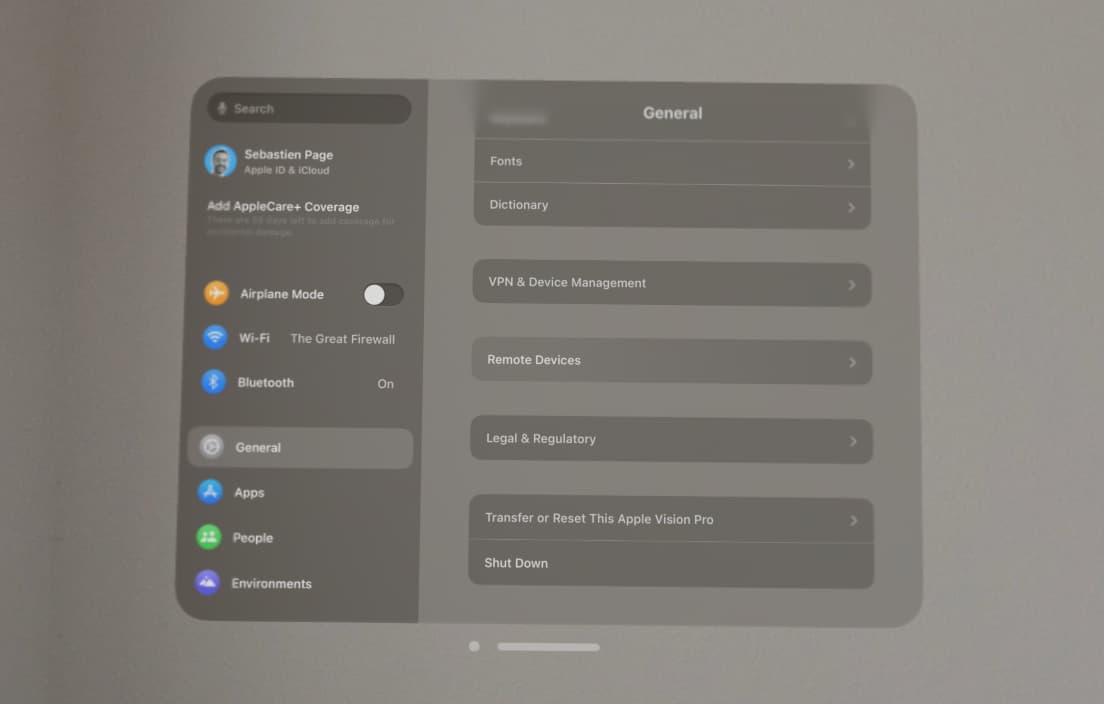
To perform a factory reset on your Apple Vision Pro 2, follow these steps, based on Apple’s official support documentation (support.apple.com). First, open the Settings app on your Vision Pro 2. Navigate to "General’ and then select ‘Transfer or Reset Vision Pro."
Next, tap "Erase All Content and Settings.’ You"ll be prompted to enter your Apple ID password to confirm your identity. This is a security measure to prevent unauthorized resets. The system will then begin the process of erasing all data and settings. Be prepared for this to take some time – potentially several minutes – depending on the amount of data stored on the device.
During the reset process, the screen may go blank, and the device may restart multiple times. Do not interrupt the process. According to Apple's support pages, interrupting the reset can lead to data corruption and render the device unusable. You’ll receive a confirmation message when the reset is complete, and the device will return to the initial setup screen.
If the reset process fails to complete, try restarting the headset and attempting the reset again. If the issue persists, contact Apple Support for assistance. They may be able to provide further guidance or recommend a repair. It’s also worth noting that, if the device is unresponsive, you might need to connect it to a power source and leave it for an extended period to allow the reset process to finish. A stable power connection is crucial during this process.
Resetting Without a Password
If you’ve forgotten your Apple ID password, you’ll need to recover it before you can perform a factory reset. Apple provides a password recovery process on their website (support.apple.com/en-us/HT201487). You’ll be asked to verify your identity through various methods, such as answering security questions, providing a trusted phone number, or using a recovery email address.
Two-factor authentication adds an extra layer of security to your Apple ID, requiring a verification code from a trusted device in addition to your password. If you have two-factor authentication enabled, you’ll need access to that device to complete the password recovery process. Losing access to your trusted device and your password can be a complex situation.
If you lose both your password and your trusted device for two-factor authentication, you're in for a headache. You'll have to contact Apple Support directly and prove you actually own the device, which can take days.
Post-Reset Setup
After a factory reset, your Apple Vision Pro 2 will guide you through the initial setup process. First, you’ll need to connect to a Wi-Fi network. Then, you’ll be prompted to sign in with your Apple ID. If you have a backup from iCloud, you’ll be given the option to restore your data from it. This will significantly speed up the setup process and restore your apps and settings.
If you choose not to restore from a backup, you’ll need to manually reconfigure your settings and download your apps. Take the time to review the privacy settings and customize the device to your preferences. It’s also crucial to immediately check for and install any available software updates. Apple often releases updates that address security vulnerabilities and improve performance.
Finally, re-pair any accessories, such as headphones or controllers, that you use with your Vision Pro 2. Ensure all your accounts are properly synced and that your data is backed up to iCloud. A fresh start is a good opportunity to review your settings and ensure everything is configured to your liking.
Common Reset Issues & Fixes
Sometimes, the reset process doesn’t go smoothly. A common issue is the reset getting stuck during the erasing process. If this happens, try forcing a shutdown by holding down the power button and volume down button simultaneously for an extended period. Then, attempt the reset again.
Another potential problem is encountering error messages during the reset. These messages can indicate a software glitch or a hardware issue. If you receive an error message, try searching for it on Apple’s support website (support.apple.com) for specific troubleshooting steps. If the device fails to boot properly after a reset, you may need to connect it to a computer and restore it using Finder.
If the device is still malfunctioning after a reset, it’s likely a hardware issue. In this case, contact Apple Support or visit an Apple Store for assistance. They can diagnose the problem and recommend a repair or replacement. It's important to have your purchase information readily available when contacting support.
No comments yet. Be the first to share your thoughts!