

Lost Password? Don't Panic.
Forgetting your Windows password is a frustrating but common issue. Whether you've misplaced it, suspect your account has been compromised, or a recent update caused problems, losing access to your system isn't a catastrophe. Data loss isn't inevitable, as Windows offers several methods for resetting your password, from simple online recovery to more advanced techniques.
This guide covers a range of solutions, starting with the easiest and progressing to methods that require more technical skill. Options like using a Microsoft account are straightforward and can be completed in minutes. Others, like using the Command Prompt, are more involved and should be approached with caution. The best method depends on how your account is set up – whether you use a Microsoft account or a local account – and whether you have access to another administrator account.
The reset methods are categorized based on your level of access. Do you have access to another administrator account on the machine, or are you completely locked out? Knowing this helps you find the right solution. We cover resetting Microsoft account passwords, resetting local account passwords with admin access, using a password reset disk, utilizing the Command Prompt, and exploring Windows recovery options.
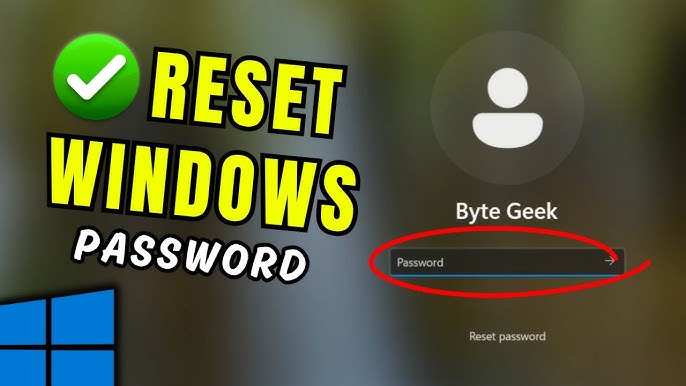
Microsoft Account Reset: The Easiest Route
If you linked your Windows 12 account to a Microsoft account – a common practice during setup – resetting your password is usually the simplest process. Microsoft provides a comprehensive online recovery system designed to get you back in quickly. The first step is to visit the Microsoft account recovery page:
You’ll be guided through a series of verification steps, typically involving two-factor authentication (2FA). This might mean receiving a security code via email, text message, or through the Microsoft Authenticator app. If you’ve enabled the Authenticator app, that's often the fastest and most secure option. However, if you've lost access to your 2FA method, Microsoft offers alternative recovery options, though they may take longer to process.
A common stumbling block is difficulty accessing your recovery email address. If your recovery email account has been compromised or you’ve forgotten its password, you’ll need to regain access to that account first. Microsoft provides its own account recovery process for Microsoft accounts, separate from Windows 12. Security questions, if you set them up previously, might also be presented as a recovery option, but these are becoming less common due to security concerns.
Microsoft's recovery process is continually evolving to improve security. In 2026, expect even more emphasis on account verification and stronger authentication methods. While the process can sometimes be lengthy, it’s generally the most reliable way to regain access to your account without losing data. Be prepared to provide as much information as possible to prove your identity during the recovery process.
- Navigate to the Microsoft account recovery page.
- Enter the email address, phone number, or Skype name associated with your Microsoft account.
- Select your preferred verification method (email, text message, or Authenticator app).
- Follow the on-screen instructions to verify your identity and reset your password.
Local Account Reset: Using Another Admin Account
If you’re using a local account and have access to another administrator account on the same computer, resetting the password is relatively straightforward. This method doesn’t require any external tools or complex procedures. Simply sign in with the administrator account that does have access.
Once logged in as an administrator, navigate to Settings > Accounts > Family & other users. Select the local account whose password you want to change. Click the Change account password button. You’ll be prompted to enter the current password (which you don’t know, in this case, but since you’re logged in as an admin, that’s not a problem) and then enter and confirm a new password.
This method only works if another administrator account exists on the system. If you’re the sole administrator and have forgotten your password, this option won’t be available. Permissions issues can sometimes arise, especially if the administrator account has been disabled or its privileges have been altered. If you encounter problems, you may need to use the Command Prompt method described later.
This is a quick solution when available, but it highlights the importance of having multiple administrator accounts for disaster recovery. Relying on a single admin account is risky, as a forgotten password can lock you out of the entire system.
Password Reset Disk: Preparedness Pays Off
A password reset disk is a USB drive containing information that allows you to reset the password for a local account. Creating this disk before you forget your password is crucial, as it’s useless once you’re locked out and haven’t prepared it. To create one, search for 'create a password reset disk' in the Windows search bar and follow the on-screen instructions.
The process involves selecting a USB drive and choosing the local account for which you want to create the reset disk. Windows will then store encrypted information on the drive. When you forget your password, you’ll be prompted to insert the reset disk on the sign-in screen. Follow the prompts to reset your password.
This method only works for local accounts, not Microsoft accounts. Keep the reset disk in a safe and secure location, as anyone with access to it can reset your password. Consider the physical security of the USB drive. A lost or stolen reset disk poses a security risk.
Creating a password reset disk is a small investment of time that can save you a lot of trouble in the long run. It's a proactive step that demonstrates good digital hygiene and provides a reliable backup plan for forgotten passwords.
Command Prompt Reset: Advanced, But Powerful
For experienced users, resetting a local account password using the Command Prompt offers a powerful, albeit more complex, solution. This method requires booting into the Windows Recovery Environment (WinRE). To access WinRE, repeatedly interrupt the boot process – power on your computer, and when you see the Windows logo, hold down the power button to force a shutdown. Repeat this process two or three times.
After a few failed boot attempts, Windows should automatically enter WinRE. Navigate to Troubleshoot > Advanced options > Command Prompt. A command prompt window will appear. From here, use the `net user` command to reset the password. The syntax is: `net user [username] [new password]`. Replace `[username]` with the account name and `[new password]` with the desired new password.
Warning: Incorrectly using the Command Prompt can destabilize your system. Ensure you type the command exactly as shown, including proper spacing. Write down the command before executing it to minimize errors. If you’re uncomfortable with the Command Prompt, explore other options.
This method bypasses the normal security measures, giving you direct access to modify account settings. It’s a potent tool, but it requires caution and understanding. After successfully changing the password, restart your computer and sign in with the new credentials.
Windows 12 Recovery Options: When All Else Fails
If none of the previous methods work, Windows' built-in recovery options provide a last resort. From the Windows Recovery Environment (accessed as described in the Command Prompt section), select Troubleshoot > Reset this PC. You’ll see two options: "Keep my files’ and ‘Remove everything".
The "Keep my files’ option attempts to reinstall Windows while preserving your personal files, such as documents, photos, and videos. However, it will remove installed applications and drivers. The ‘Remove everything" option performs a clean install, deleting all data on your system drive. This option will result in complete data loss, so proceed with extreme caution and only if you have a recent backup.
Another option within WinRE is System Restore. This allows you to revert your computer to a previous point in time, potentially before you forgot your password. System Restore relies on previously created restore points and may not always be available. Enable System Restore regularly.
As a final measure, a clean install of Windows is possible, but it requires a bootable USB drive and will erase all data on your system. Back up your data before attempting any of these recovery options. Regularly backing up your important files is the best defense against data loss.
Third-Party Tools: A Word of Caution
Numerous third-party password reset tools claim to unlock your Windows 12 account. While some may be legitimate, many are riddled with malware, spyware, or other malicious software. Using these tools carries significant security risks, including data theft, identity theft, and system compromise.
Recommending specific tools is difficult, as the landscape is constantly changing and the risk of encountering malicious software is high. If you choose to explore this option, exercise extreme caution. Only download tools from reputable sources and scan them thoroughly with a reliable antivirus program before running them.
Using third-party password reset tools may violate Windows' terms of service, potentially voiding your warranty or support agreement. Prioritize the built-in recovery options provided by Microsoft.
Third-Party Windows 12 Password Reset Tool Comparison (2026)
| Tool Type | Risk Level | Data Security | Ease of Use |
|---|---|---|---|
| Offline Password Crackers | High | Poor | Difficult |
| Bootable Password Reset Disks | Medium | Fair | Moderate |
| Windows Password Recovery Utilities | Medium | Fair | Moderate |
| Microsoft Account Recovery (Online) | Low | Good | Easy |
| Local Account Password Hint (If Enabled) | Low | Good | Easy |
| Professional Data Recovery Services | Low | Good | Difficult |
| Command Prompt (Advanced Users, Requires Setup) | Medium | Fair | Difficult |
Illustrative comparison based on the article research brief. Verify current pricing, limits, and product details in the official docs before relying on it.
Preventing Future Lockouts: Best Practices
Preventing password lockouts is always preferable to dealing with the aftermath. Start by creating strong, unique passwords for all your accounts. A strong password should be at least 12 characters long and include a mix of uppercase and lowercase letters, numbers, and symbols.
Consider using a password manager, such as 1Password or LastPass, to securely store and generate complex passwords. Password managers can also automatically fill in your credentials on websites and apps, saving you time and effort. Enabling two-factor authentication (2FA) whenever possible adds an extra layer of security to your accounts.
Regularly updating your passwords is crucial. Change your passwords every few months, especially for sensitive accounts like your email and bank accounts. For local accounts, create a password reset disk as a backup plan. If you’re consistently forgetting your passwords, switching to a Microsoft account can simplify the recovery process.
A proactive approach to password security will save you headaches and protect your valuable data. Implementing these best practices provides peace of mind.


No comments yet. Be the first to share your thoughts!