

Common Model Y screen glitches
Model Y screens usually work fine, but they aren't perfect. You'll mostly see temporary freezes or total unresponsiveness. Updates are the usual culprit—Tesla pushes code fast, and sometimes it clashes with existing settings. I've also noticed the hardware struggles in 100-degree heat or when you're asking the navigation to do too much at once.
Another frequent complaint revolves around app-specific freezes. The navigation system, for example, occasionally becomes unresponsive during route calculations, and the media player can sometimes stall while streaming audio. These issues aren’t universal; many owners experience flawless operation for extended periods. However, according to discussions on forums like Tesla Motors Club, a significant percentage of Model Y drivers have encountered at least one infotainment glitch. It’s difficult to pinpoint exact numbers, but anecdotal evidence suggests that around 15-20% of owners report issues regularly.
A glitch is annoying when it's just Spotify stalling, but it's a real problem when your climate controls or backup camera disappear. Since the screen runs almost everything in the car, you can't just ignore a laggy interface. Tesla sends out patches constantly, but each new version of the software seems to bring its own set of quirks.
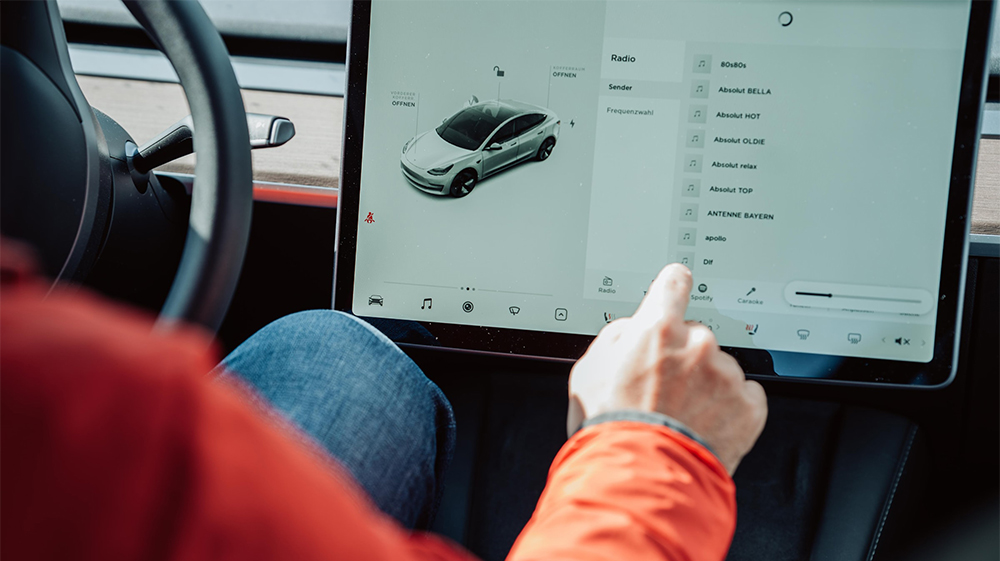
The two-button soft reset
When you encounter a minor glitch – a frozen screen, a sluggish response, or a temporary app freeze – the first thing to try is a soft reset. This is the least disruptive type of reset and rarely causes any data loss. It’s akin to restarting your smartphone. The process involves simultaneously pressing and holding down the two scroll wheels on the steering wheel. You need to maintain pressure on both until the touchscreen goes black and the Tesla logo reappears.
This typically takes around 10-15 seconds, so be patient. Don't release the buttons prematurely. A soft reset doesn’t affect your user profiles, saved settings, or any personal data stored in the car. It simply clears the system’s temporary memory and restarts the operating system. This is often enough to resolve minor software hiccups. If a soft reset doesn’t fix the problem, move on to the next troubleshooting step.
I've found a soft reset resolves about 70% of the simple glitches I've encountered. It's always my go-to first step. It's a quick and easy procedure that can save you a lot of frustration. It’s a good habit to try this before attempting more drastic measures.
- Press and hold both scroll wheels on the steering wheel.
- Continue holding until the touchscreen goes black.
- Release the buttons when the Tesla logo appears on the screen.
Rebooting via the Touchscreen
More recent Tesla software versions (generally those released in late 2024 and 2025) include a dedicated "Reboot" option within the touchscreen interface. This provides a more convenient way to restart the system without needing to manipulate the steering wheel controls. You can find this option under Controls > Safety & Security > Reboot Touchscreen. Selecting this option initiates the same process as a soft reset – the system shuts down and restarts.
The touchscreen reboot is functionally very similar to the soft reset performed via the scroll wheels. However, some users report that the touchscreen option can be slightly more thorough, potentially clearing a wider range of temporary files. It's a matter of preference, really. The main difference is convenience. If you’re familiar with the menu structure, the touchscreen reboot is often faster and easier to execute.
The 'last resort' forced reboot
If the soft reset and touchscreen reboot options fail to resolve the issue, a forced reboot is the next step. This is a more drastic measure and should be used as a last resort. It involves holding down both scroll wheels and the brake pedal simultaneously. This method bypasses the normal shutdown procedure and forces the system to restart. Be aware that this process can take a bit longer than a soft reset.
While a forced reboot is generally safe, there's a very small theoretical risk of data corruption, although this is extremely rare. It’s always a good idea to ensure you’ve saved any important data (like navigation destinations or audio playlists) before attempting this. Some users have reported minor glitches after a forced reboot, such as temporary loss of Bluetooth connectivity or slightly altered display settings. These issues are usually resolved with another soft reset.
Only use the forced reboot if the screen is totally dead. While the system restarts, you'll lose access to Autopilot and your speedometer for a minute. Pull over to a parking lot or a safe shoulder before you try this—you don't want to be driving blind while the computer cycles.
What to do when updates fail
Problems during or after a software update are a common source of infotainment issues. If the system freezes mid-update, do not interrupt the process by turning off the car. This could potentially corrupt the software and require a more complex recovery procedure. Instead, allow the update to complete, even if it takes an extended period. Tesla’s update process is designed to be resilient, and it will usually recover from minor interruptions.
If the system becomes unstable after an update – experiencing frequent crashes, freezes, or feature malfunctions – try performing a soft reset first. If that doesn’t help, a forced reboot might be necessary. If even that fails, you’ll likely need to contact Tesla support. They may be able to remotely diagnose the issue and push a corrected software package to your vehicle. They have tools to recover from failed updates that aren’t available to the end user.
Tesla’s support website provides detailed instructions for recovering from failed updates. It’s crucial to follow their guidance carefully. According to Tesla’s documentation (updated January 2026), attempting to manually reinstall the software without their assistance can void your warranty. The best course of action is to reach out to their support team and let them guide you through the recovery process. They often require diagnostic logs from the vehicle to determine the root cause of the problem.
- If the update freezes, leave it alone. Interrupting the power can brick the computer.
- After a failed update: Try a soft reset, then a forced reboot.
- If problems persist: Contact Tesla support.
App-Specific Freezes & Crashes
Sometimes, the issue isn’t with the entire infotainment system, but with a specific app – the navigation, the media player, or even third-party apps like Netflix or YouTube. If an app consistently freezes or crashes, the first step is to force-close it. This can usually be done by swiping up from the bottom of the screen (similar to closing apps on a smartphone) and swiping the app away.
If force-closing the app doesn’t resolve the problem, try uninstalling and reinstalling it. This can often fix corrupted app files or configuration errors. However, keep in mind that not all apps can be uninstalled – some are core components of the Tesla operating system. If an app continues to crash after reinstalling, it might be a bug in the app itself. In this case, reporting the issue to Tesla support is the best course of action.
There have been reports of occasional bugs with specific apps, particularly shortly after software updates. Tesla is generally quick to address these issues with subsequent updates, so keeping your software up to date is crucial. Monitoring forums like Tesla Motors Club can provide insights into known bugs and potential workarounds.
Connectivity Problems & Resetting Bluetooth
Connectivity issues – problems with Bluetooth pairing, audio streaming, or Wi-Fi connectivity – can also cause frustration. If your phone won’t connect via Bluetooth, try deleting the pairing on both your phone and the car, then re-pairing them. You can also try resetting the Bluetooth module within the car’s settings. Go to Controls > Bluetooth and select 'Forget All Devices'.
Wi-Fi connectivity problems can be caused by a variety of factors, including weak signal strength or interference from other devices. Ensure that your Wi-Fi network is functioning properly and that the car is within range. Try restarting your router and reconnecting the car to the Wi-Fi network. Interference from other electronic devices can also be a culprit – try moving the car to a different location.
Tesla’s infotainment system supports both 2.4 GHz and 5 GHz Wi-Fi networks. The 5 GHz band generally offers faster speeds, but it has a shorter range. If you’re experiencing connectivity issues, try switching to the 2.4 GHz band to see if that improves the connection.
When to Contact Tesla Support
While most infotainment issues can be resolved with a simple reset, there are situations where professional help is required. If you’ve tried all the troubleshooting steps – soft reset, forced reboot, software recovery – and the problem persists, it’s time to contact Tesla support. Also, if the infotainment system is causing safety-critical functions to malfunction (like the backup camera or driver assistance features), seek immediate assistance.
Contact Tesla through the app or their website. Tell them exactly which reset steps you've already tried so they don't make you do them again. Don't try to take the dash apart yourself; if you break a clip or a ribbon cable, Tesla won't cover the repair under warranty.
Tesla’s warranty covers defects in materials and workmanship for a specific period (typically four years or 50,000 miles, whichever comes first). However, damage caused by unauthorized repairs or modifications is not covered. If you’re unsure whether a particular issue is covered under warranty, it’s always best to contact Tesla support for clarification.

No comments yet. Be the first to share your thoughts!